Upcycled French Vintage Baubles Jewelry: A Material Guide
Discover the material properties of upcycled French vintage baubles jewelry. Compare glass, celluloid, and enamel for durable 2026 designs.

The Renaissance of Upcycled French Vintage Baubles Jewelry
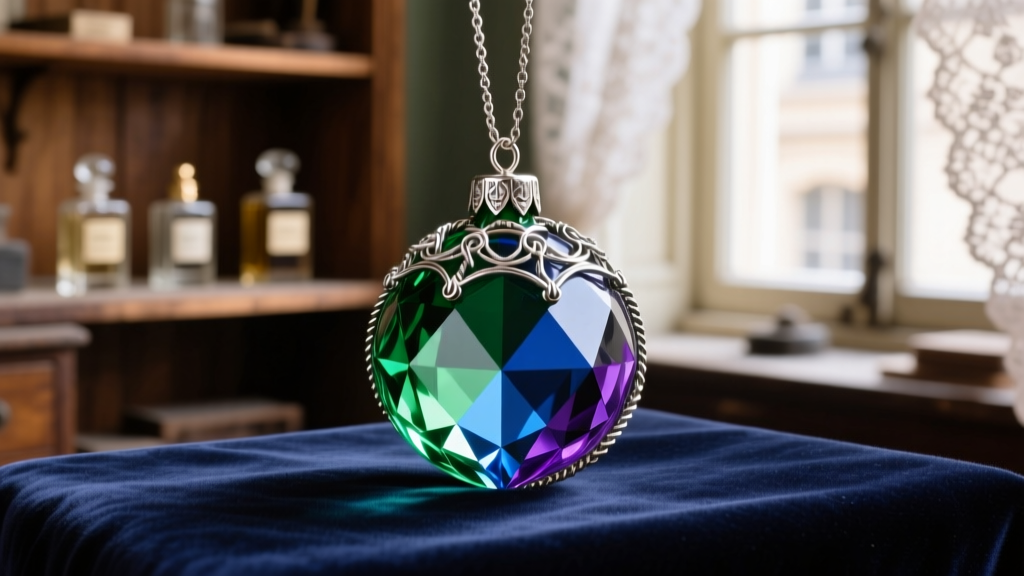
In the contemporary jewelry landscape of 2026, sustainability and heritage converge in the highly specialized niche of upcycled French vintage baubles jewelry. This practice goes far beyond simply restringing orphaned beads. Modern artisans and bench jewelers are engineering entirely new structural settings for 19th and 20th-century French components—ranging from Art Deco Galalith hairpins to 1890s Baccarat crystal pendants and fragile Limoges enamel drops. However, integrating these historical artifacts into wearable, modern designs requires a rigorous understanding of material science. Vintage French components were never designed to withstand the tensile stress of modern wire-wrapping or the chemical exposure of contemporary jewelry adhesives. To create pieces that survive daily wear, jewelers must navigate the unique physical properties, degradation risks, and structural limitations of these historic materials.
The Material Trinity: Glass, Early Plastics, and Enamel
When sourcing components for upcycled French vintage baubles jewelry, artisans primarily encounter three distinct material categories. Each possesses a unique chemical makeup that dictates how it can be manipulated, set, and preserved.
Pâte de Verre and Lead Crystal
French crystal houses like Baccarat, Saint-Louis, and Daum mastered the art of lead crystal and pâte de verre (a kiln-cast glass paste). Vintage French lead crystal typically contains between 24% and 32% lead oxide (PbO). While this high PbO content grants the material its legendary refractive index (RI of ~1.7) and brilliant acoustic ring, it significantly lowers the Mohs hardness to approximately 5.5. By comparison, modern lead-free crystal sits closer to 6.5. This softness means that vintage French crystal is highly susceptible to micro-scratching if tumbled or polished with aggressive abrasive compounds. Pâte de verre, characterized by its sugary, translucent texture and intricate molded details, is even more fragile due to internal micro-bubbles formed during the lost-wax casting process. Drilling these components for bead-linking requires diamond-coated burrs at ultra-low RPMs with constant water cooling to prevent thermal shock and conchoidal fracturing.
French Celluloid and Galalith
The 1920s and 1930s Parisian fashion scene relied heavily on early synthetics. Galalith, a milk-protein plastic (casein) developed in France, was widely used to simulate tortoiseshell, coral, and ivory in Art Deco baubles. Unlike thermoplastics, Galalith cannot be melted or molded once cured; it can only be machined or carved. Celluloid, composed of nitrocellulose and camphor, was also prevalent but poses severe conservation challenges. According to the Victoria and Albert Museum's conservation guidelines, celluloid is inherently unstable. Over decades, it off-gasses nitric acid, leading to 'vinegar syndrome,' crazing, and structural embrittlement. When upcycling celluloid French baubles, friction from sawing or drilling can generate enough heat to melt the material or, in extreme cases, ignite it. Jewelers must seal degraded celluloid with a conservation-grade acrylic resin like Paraloid B-72 before incorporating it into metal settings to halt outgassing and stabilize the surface.
Limoges and Champlevé Enamel
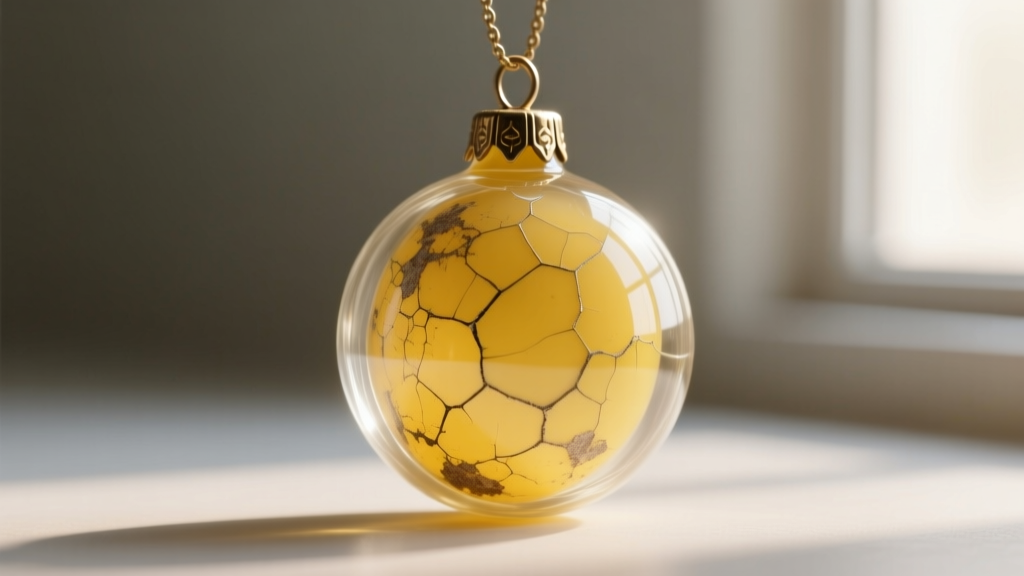
Enamel is essentially fused silica glass bonded to a metal substrate, usually copper or silver in French vintage pieces. The primary danger when upcycling enameled baubles is thermal shock. The coefficient of thermal expansion (CTE) between the glass enamel and the copper base must be perfectly matched. If a jeweler uses a high-exotherm two-part epoxy or UV resin that generates heat during the curing process, the localized temperature spike can cause the vintage enamel to craze or pop off the metal substrate. Furthermore, plique-à-jour (backless stained-glass enamel) lacks a metal backing entirely, making it incredibly vulnerable to torsional stress.
Structural Integrity and Upcycling Failure Modes
Understanding the mechanical limits of these materials is critical for preventing catastrophic failure in finished jewelry. The table below outlines the physical properties and common failure modes associated with vintage French components.
| Material | Mohs Hardness | Tensile Strength | UV / Moisture Resistance | Primary Upcycling Failure Mode |
|---|---|---|---|---|
| French Lead Crystal (c. 1920) | 5.5 | Low (Brittle) | Excellent | Conchoidal fracture during drilling; surface scratching from metal prongs. |
| Pâte de Verre | 5.0 - 5.5 | Very Low | Excellent | Cleavage along internal micro-bubble fault lines under wire-wrapping torque. |
| Galalith (Casein) | 2.5 - 3.0 | Moderate | Poor (Absorbs moisture) | Warping and swelling if exposed to water; chemical degradation from cyanoacrylate. |
| French Celluloid | 2.0 - 2.5 | Low (when aged) | Poor (UV degrades) | Melting from friction; structural crumbling due to nitric acid outgassing. |
| Champlevé Enamel on Copper | 5.5 (Glass) | High (Metal base) | Good | Enamel crazing or delamination from thermal shock during adhesive curing. |
Engineering the Upcycle: Wire, Adhesives, and Settings
Creating durable upcycled French vintage baubles jewelry requires abandoning traditional modern jewelry techniques in favor of conservation-minded engineering.
Wire-Wrapping Protocols
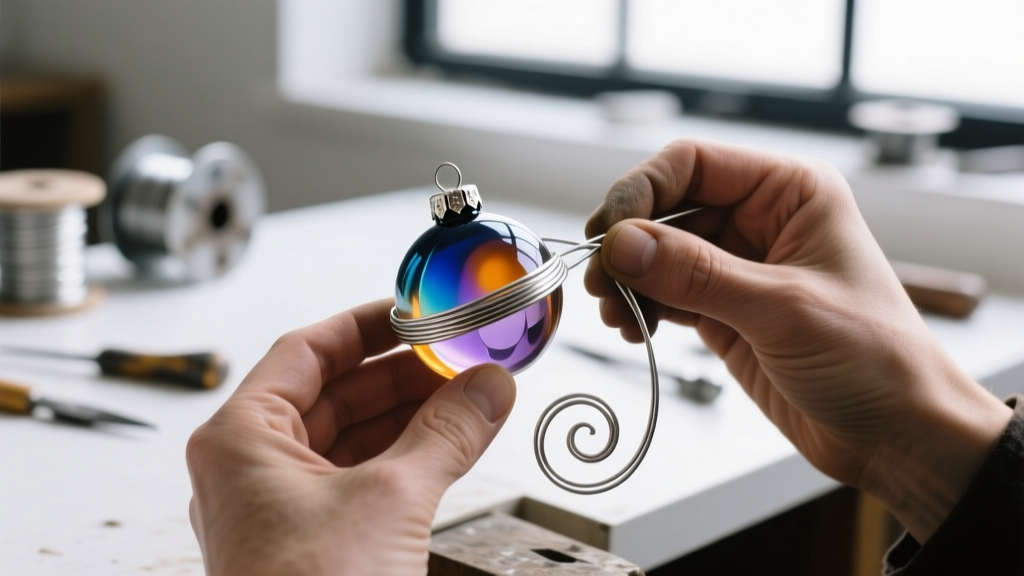
When wire-wrapping fragile glass or pâte de verre baubles, the choice of wire gauge and temper is paramount. Half-hard sterling silver retains too much 'spring' and memory, which translates into continuous torsional pressure against the glass, eventually causing it to crack. Master jewelers opt for 20-gauge or 22-gauge dead-soft Argentium silver. Argentium is highly preferred over traditional sterling because its germanium content makes it highly tarnish-resistant. Since vintage French crystal cannot be aggressively polished with a jeweler's cloth without risking micro-abrasions, using a tarnish-resistant wire eliminates the need for future polishing that could damage the bauble. The dead-soft temper allows the wire to be shaped with minimal torque, gently cradling the artifact rather than squeezing it.
Adhesive Selection and Chemical Compatibility
The jewelry industry's reliance on cyanoacrylate (Super Glue) and standard two-part epoxies is disastrous for vintage materials. Cyanoacrylate undergoes a rapid polymerization process that can chemically burn porous materials like Galalith, leaving permanent white hazing. Standard epoxies generate significant exothermic heat as they cure, which is enough to crack vintage Limoges enamel. According to research published by the Corning Museum of Glass regarding historical glass conservation, reversible and chemically inert adhesives are mandatory. For bonding vintage French baubles to metal bails or settings, jewelers should use Paraloid B-72 (an ethyl methacrylate copolymer) dissolved in acetone. It cures clear, remains slightly flexible to absorb impact shocks, and can be safely reversed with solvents without harming the original artifact. For high-stress structural bonds where reversibility is secondary, specialized flexible, non-exothermic silicones designed for glass-to-metal bonding are the safest alternative.
Sourcing and Valuation in the 2026 Market
As the demand for upcycled French vintage baubles jewelry has surged, the market for orphaned components has become highly competitive. Sourcing authentic pieces requires a keen eye and an understanding of historical manufacturing techniques. The famous Marché aux Puces de Saint-Ouen in Paris remains a primary hunting ground, but estate liquidations and specialized European bead societies are increasingly where high-grade Baccarat and Daum components surface.
Valuation is heavily dictated by material authenticity and condition. In 2026, a strand of authenticated 1920s French Galalith beads featuring intricate, hand-carved Art Deco motifs can command between $150 and $300, whereas modern resin reproductions sell for a fraction of that. Historically, jewelers used the 'hot pin' test to identify early plastics, but this destructive method is universally condemned today as it permanently damages the artifact and releases toxic fumes. Instead, experts rely on long-wave UV fluorescence testing. Authentic vintage French celluloid and Galalith exhibit specific fluorescent signatures under 365nm UV light, a non-destructive testing method championed by the Gemological Institute of America (GIA) for identifying historical jewelry materials. Furthermore, authentic pâte de verre will show a distinct 'sugary' granularity under 10x magnification, unlike the perfectly smooth surface of modern pressed glass.
Conclusion
The creation of upcycled French vintage baubles jewelry is a delicate dialogue between history and modern engineering. By respecting the Mohs hardness of lead crystal, stabilizing the chemical volatility of early French plastics, and protecting the thermal sensitivity of vintage enamels, artisans can breathe new life into forgotten artifacts. Success in this niche requires discarding brute-force modern bench techniques in favor of conservation-grade adhesives, dead-soft Argentium wire, and non-destructive authentication methods. When executed with material science in mind, these upcycled pieces become not just sustainable fashion statements, but wearable, enduring museums of French decorative arts.


