A Material Guide to M&S Vintage Jewelry Metals & Stones
Discover the specific metals, glass, and stones used in M&S vintage jewelry. Learn how to identify hallmarks, test materials, and restore classic pieces.

The Legacy of Marks & Spencer High-Street Jewelry
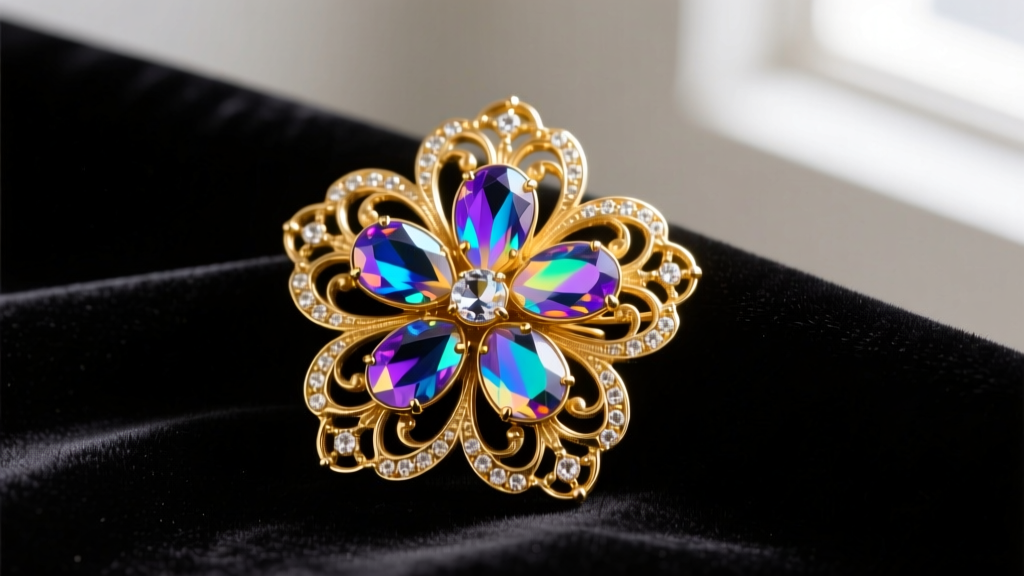
When collectors and stylists discuss high-street heritage, M&S vintage jewelry occupies a unique tier of British material culture. Unlike modern fast-fashion accessories manufactured with planned obsolescence, Marks & Spencer pieces from the 1970s through the late 1990s—often bearing the iconic 'St. Michael' label or early M&S maker's marks—were engineered for longevity. Retail giants like M&S contracted prestigious British manufacturers, including Ciro of London and various Birmingham-based silversmiths, to produce semi-fine and high-end costume jewelry. Understanding the specific metallurgy, glass composition, and adhesive technologies of these eras is critical for authentication, valuation, and safe restoration in 2026.
Base Metals vs. Precious Alloys in M&S Collections
The foundational integrity of any vintage piece relies on its base metal. While contemporary high-street jewelry frequently relies on zamak (a zinc-aluminum alloy) or brittle pewter, vintage M&S costume pieces predominantly utilized high-grade brass or white bronze alloys. These materials provided a dense, non-porous substrate that was essential for the electroplating processes of the era.
Rolled Gold and Electroplating Thickness
One of the most defining characteristics of M&S vintage jewelry is the sheer thickness of its gold finishes. Modern gold-plated jewelry typically features a flash plating of 0.1 to 0.5 microns, which wears away within months. In contrast, 1980s M&S gold-tone pieces often featured electroplated layers ranging from 2.0 to 3.5 microns of 18k or 22k gold over a copper or nickel strike layer. Furthermore, M&S occasionally stocked 'rolled gold' or gold-filled items, where a sheet of 9k or 14k gold was mechanically bonded to a brass core, comprising at least 1/20th of the total metal weight. This mechanical bonding ensures that even heavily worn vintage bangles and chains retain their golden hue decades later.
Sterling Silver and Hallmarking Quirks
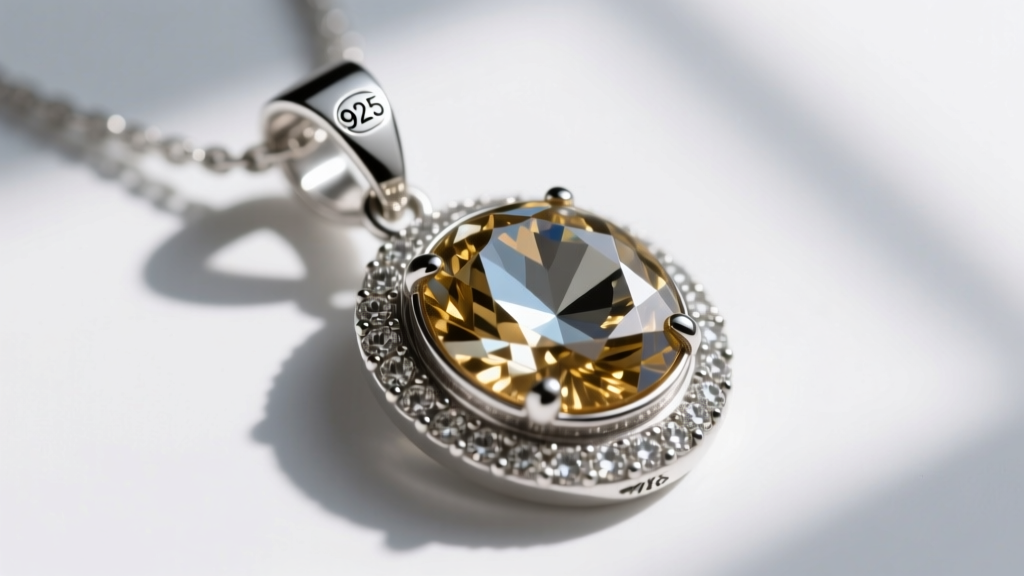
For their semi-fine lines, M&S relied heavily on 925 sterling silver. According to the The Assay Office, the Hallmarking Act of 1973 strictly regulated silver over 7.78 grams in the UK. Consequently, heavier M&S vintage silver bangles and chunky chain necklaces from the 1980s and 90s will bear full UK hallmarks, including the sponsor's mark (maker), the standard mark (925), and the assay office mark (often the Birmingham anchor or London leopard). However, lighter pieces, such as delicate marcasite stud earrings or thin rings, are often exempt and may only feature a simple '925' stamp or no mark at all, requiring acid testing or XRF (X-ray fluorescence) analysis for definitive verification.
Simulants, Glass, and Semi-Precious Stones
The visual impact of M&S vintage jewelry is largely driven by its masterful use of simulants and semi-precious stones. The Victoria and Albert Museum notes that the late 20th century saw a renaissance in high-quality paste and glass jewelry, a trend M&S capitalized on by sourcing premium components from European glassmakers.
Marcasite (Pyrite) and Adhesive Chemistry
Perhaps the most popular semi-precious material in M&S vintage silver collections is marcasite. Gemologically, the 'marcasite' used in jewelry is actually pyrite (iron sulfide), chosen for its high hardness and metallic luster. In vintage M&S pieces, these tiny faceted stones were typically set using darkened shellac or early two-part epoxy resins. This chemical bond is highly susceptible to modern cleaning methods; exposing vintage marcasite to ultrasonic cleaners or hot water will cause the adhesive to soften, resulting in catastrophic stone loss.
Lead Glass and Foil-Backed Rhinestones
For their premium costume lines, M&S utilized high-refractive-index lead glass, often cut in chaton or baguette shapes. Many of these stones feature a metallic foil backing to enhance brilliance. The primary failure mode for these vintage pieces is moisture ingress. If the protective top coating of the glass is chipped, or if the piece is submerged in water, the foil backing oxidizes, turning the stone a dull, opaque black. Restoration of blackened foil-backs is nearly impossible without complete stone replacement.
| Material Property | M&S Vintage (1970s-1990s) | Modern High-Street (2020s) |
|---|---|---|
| Gold Plating Thickness | 2.0 - 3.5 microns (heavy electroplate) | 0.1 - 0.5 microns (flash plate) |
| Base Metal Substrate | High-grade brass, white bronze | Zamak, pewter, recycled mixed alloys |
| Stone Settings | Prong-set glass, epoxy-set marcasite | Glued-in acrylic, machine-stamped prongs |
| Faux Pearl Coating | Essence d'orient (guanine) over glass | Synthetic pearlescent paint over plastic |
Enamel and Resin: Degradation and Repair
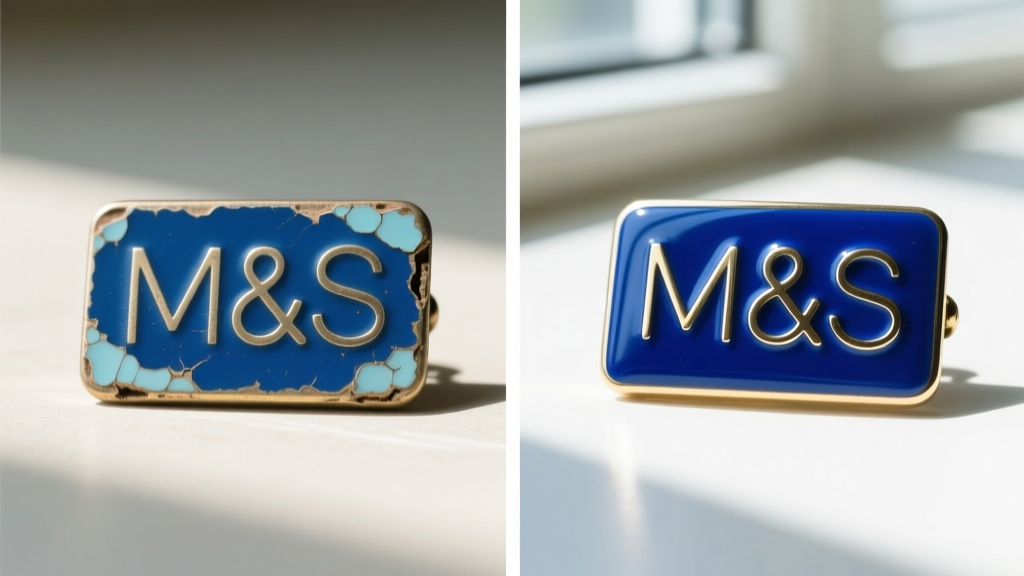
M&S frequently incorporated enamel work into their brooches and lapel pins. It is vital to distinguish between vitreous enamel (glass fused to metal at high temperatures) and cold enamel (a pigmented epoxy resin). Most M&S vintage costume pieces utilized cold enamel due to the cost-effectiveness and the ability to use base metals that would melt in a kiln. Over decades, cold enamel becomes brittle and can yellow if exposed to prolonged UV light. Repairing these pieces requires carefully excavating the degraded resin with a microscopic dental pick and refilling the champlevé recesses with a modern, UV-stable jewelry-grade epoxy, color-matched using mineral pigments.
Practical Testing and Authentication Framework
Authenticating M&S vintage jewelry requires a multi-sensory and scientific approach. First, examine the reverse of the piece. Early St. Michael jewelry often features a distinct, slightly textured backplate and sturdy, soldered jump rings rather than the split rings found on modern imports. Second, utilize a neodymium magnet. While gold and silver are non-magnetic, the underlying strike layers in some vintage gold-plated brass may contain trace nickel, which can exhibit a very faint magnetic pull—a stark contrast to the strong pull of modern steel-core costume jewelry. Finally, for unmarked silver pieces, a non-destructive XRF test at a local precious metals refinery will instantly reveal the exact elemental breakdown, confirming the 92.5% silver content characteristic of genuine M&S semi-fine collections.
Conclusion
The enduring appeal of M&S vintage jewelry lies in its uncompromising material standards. By understanding the specific gravity of its glass stones, the micron thickness of its gold plating, and the chemical vulnerabilities of its marcasite adhesives, collectors can preserve these wearable artifacts of British retail history. Whether you are sourcing pieces for a curated vintage boutique or restoring a family heirloom, respecting the original material properties is the key to maintaining the structural and aesthetic integrity of these remarkable high-street treasures.


