How to Clean Carolee Vintage Jewelry: Faux Pearls & Gold Plate
Learn how to safely clean Carolee vintage jewelry. Expert tips for restoring gold-plated finishes, faux pearls, and rhinestones without causing damage.

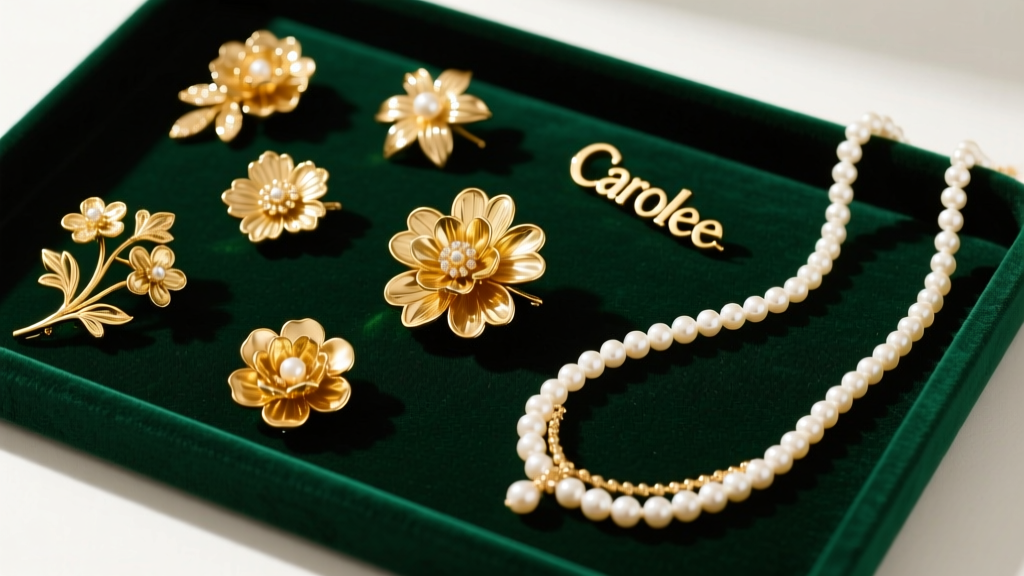
For decades, Carolee stood as a titan of American costume jewelry, bridging the gap between high-end department store luxury and accessible, trend-driven elegance. Founded in the 1970s and reaching its zenith in the 1980s and 1990s, the brand was renowned for its intricate floral motifs, lavish gold-toned finishes, and high-quality faux pearls. Though the company ceased operations around 2018, Carolee vintage jewelry remains highly sought after by collectors and stylists alike. However, maintaining these pieces requires a fundamentally different approach than caring for fine solid gold or gemstone jewelry.
Because vintage costume jewelry relies on electroplating, adhesive settings, and delicate synthetic coatings, using the wrong cleaning methods can permanently strip finishes and ruin heirloom pieces. In this comprehensive guide, we will explore the material science behind Carolee's designs and provide a meticulous, conservation-grade framework for cleaning, restoring, and storing your vintage collection.
Identifying Authentic Carolee Marks and Material Composition
Before applying any cleaning solution, it is crucial to understand what you are actually cleaning. Carolee primarily utilized brass or white metal (pewter/zinc alloys) as a base, which was then heavily electroplated with 14k or 22k gold. The brand's stones were predominantly lead-free glass crystals (often sourced from Swarovski) and high-grade faux pearls.
Authentic pieces typically feature specific hallmarks. Early pieces may have a simple "Carolee" script stamp on the hangtag or clasp, while later iterations feature the trademarked "C" enclosed in a circle or a rectangular cartouche. Identifying these marks helps confirm the era of the piece, which can sometimes indicate the specific type of adhesive used for the rhinestones—information that dictates how much moisture the piece can safely tolerate during cleaning.
The Chemistry of Costume Jewelry Cleaners: What to Avoid
The most common mistake collectors make is treating vintage costume jewelry like fine jewelry. According to the Victoria and Albert Museum's conservation guide, commercial silver dips and ultrasonic cleaners are highly destructive to plated costume pieces.
- Ammonia-Based Dips: These harsh chemicals will instantly strip the microscopic layers of gold electroplate, exposing the raw brass or pewter beneath, which quickly oxidizes and turns black.
- Ultrasonic Cleaners: The high-frequency vibrations can shatter glass chatons, loosen prong settings, and completely disintegrate the fragile silver or gold foil backing applied to the reverse of rhinestones to enhance their sparkle.
- Baking Soda Pastes: Baking soda is mildly abrasive. On a Mohs hardness scale, gold plating is exceptionally soft. Scrubbing with baking soda will create micro-scratches, dulling the mirror finish of Carolee's gold-toned surfaces.
Step-by-Step Cleaning Guide for Gold-Tone Carolee Pieces
For smooth gold-plated surfaces without glued-in stones, a gentle damp-cleaning method is the safest approach. This removes decades of accumulated skin oils, lotions, and environmental grime without compromising the plating.
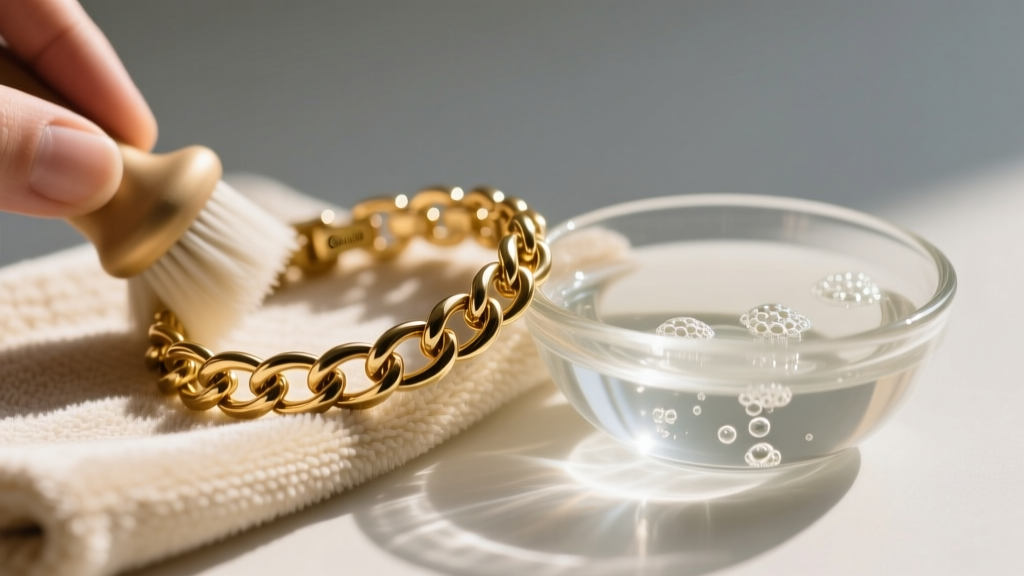
The Damp-Cleaning Protocol
- Prepare the Solution: Mix a few drops of pH-neutral, dye-free dish soap (such as Dawn Free & Clear) into a bowl of distilled water. Distilled water is critical; tap water contains minerals like calcium and magnesium that can leave stubborn hard-water spots on metallic surfaces.
- Targeted Application: Never submerge a Carolee piece. Instead, dip a soft-bristled makeup brush or a cosmetic sponge swab into the solution. Gently work the suds over the gold-plated links, floral petals, or textured surfaces.
- Detailing Crevices: Use a wooden toothpick to gently dislodge hardened debris from deep crevices. Avoid metal needles or pins, which will scratch the gold plating and expose the base metal to moisture.
- Rinsing and Drying: Wipe the piece with a microfiber cloth lightly dampened with plain distilled water. Immediately dry the jewelry thoroughly with a second, bone-dry microfiber cloth. Any lingering moisture in the joints will cause the base metal to rust from the inside out.
Restoring Carolee Faux Pearls and Luster
Carolee is perhaps most famous for its faux pearl strands and pearl-accented brooches. These are typically glass or plastic beads coated with a pearlescent pigment (historically derived from guanine crystals found in fish scales, and in later decades, synthetic mica and titanium dioxide). This coating is incredibly fragile and is easily dissolved by alcohol, perfume, and acidic sweat.
To clean Carolee faux pearls, use a barely damp, lint-free cotton cloth. Wipe each pearl individually with a gentle, circular motion. If the pearls have lost their luster due to years of skin contact, you can apply a minuscule amount of mineral oil to a cloth and buff them gently. This rehydrates the surface and restores a temporary glow, though it will not repair coating that has physically peeled away. Never use jewelry polishing cloths on pearls, as the embedded polishing compounds will strip the pearlescent finish entirely.
Rhinestone and Crystal Maintenance
Carolee frequently utilized foiled rhinestones to mimic the brilliance of diamonds and colored gemstones. The "foil" is a microscopic layer of metallic backing applied to the underside of the glass stone. If moisture breaches the prong setting and touches this foil, it oxidizes, turning the stone gray or black—a condition collectors refer to as a "dead" stone.
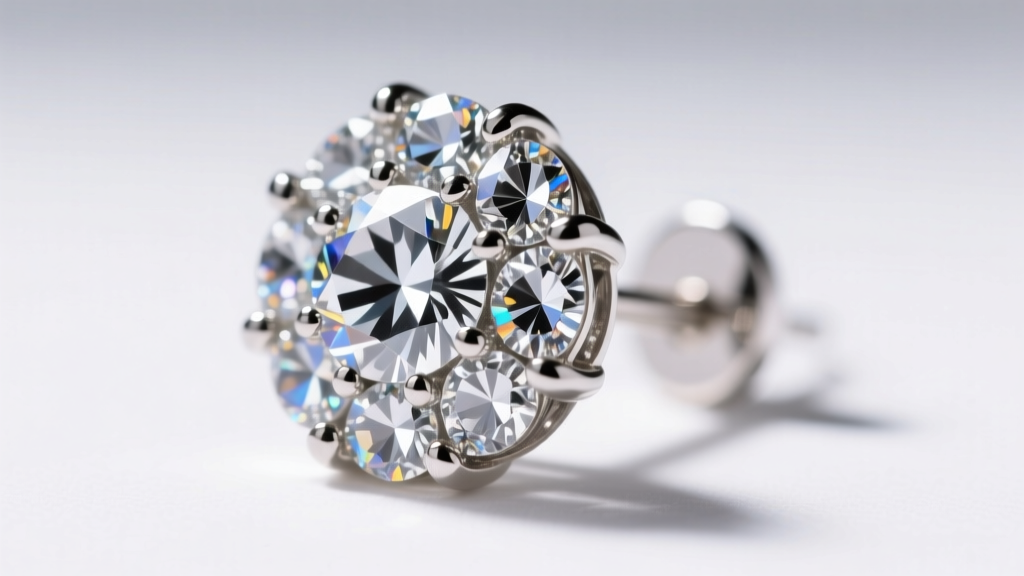
Because of this vulnerability, rhinestone-heavy Carolee brooches and earrings must only be cleaned using dry methods. Use a clean, dry, soft-bristled blush brush to sweep away dust from the table (top) of the crystals. For stubborn grime on the surface of the stone, lightly breathe on the crystal to create a tiny amount of condensation, and immediately buff it with a dry microfiber cloth. Never apply liquid directly to a prong-set rhinestone.
Troubleshooting Common Carolee Wear Issues
Even with meticulous care, vintage costume jewelry is subject to the ravages of time and wear. Below is a diagnostic framework for addressing the most common issues found in estate Carolee pieces.
| Issue | Root Cause | Expert Solution |
|---|---|---|
| "Dead" or Gray Rhinestones | Moisture has breached the setting, oxidizing the delicate metallic foil backing. | The foil cannot be restored. The stone must be carefully removed with flush cutters, the setting cleaned, and a new unfurled glass chaton glued in using UV-curing resin. |
| Base Metal Showing (Brass Spots) | Friction and sweat have worn away the gold electroplating, exposing the brass or copper alloy base. | Apply a micro-thin layer of Renaissance Wax to seal the exposed metal and prevent green skin reactions. For a permanent fix, seek a professional electroplating service. |
| Green Skin Reaction | The copper content in the base metal alloy reacts with the acidic pH of the wearer's sweat. | Paint the inside of bracelets or ring bands with a clear, hypoallergenic jewelry shield or a thin coat of clear polyurethane to create a moisture barrier. |
| Cloudy Enamel Work | Micro-scratches from improper polishing or exposure to harsh chemicals. | Use a specialized plastic polish (like Novus 2) on a Q-tip to gently buff the enamel. Avoid getting the polish on the surrounding gold plating. |
Archival Storage for Long-Term Preservation
Proper storage is just as critical as cleaning. The American Institute for Conservation (AIC) Wiki on Costume Jewelry emphasizes that environmental control is the best defense against the degradation of composite materials.
- Avoid PVC Plastics: Never store Carolee jewelry in cheap, flexible plastic baggies that emit polyvinyl chloride (PVC) gases, which can cause metal to tarnish and pearl coatings to yellow. Use only archival-quality, acid-free polyethylene zip bags.
- Anti-Tarnish Strips: Place a 3M anti-tarnish strip inside each storage bag or jewelry box drawer. These strips absorb airborne sulfur compounds that cause base metals to darken.
- Climate Control: Store your collection in a climate-controlled interior room. Attics and basements experience humidity fluctuations that will rapidly destroy rhinestone foils and weaken vintage jewelry adhesives.
- Individual Wrapping: Wrap each piece in acid-free, unbuffered tissue paper before placing it in a bag. This prevents the prongs of one brooch from scratching the gold plating of an adjacent necklace.
Conclusion
Caring for Carolee vintage jewelry is an exercise in restraint and precision. By understanding the delicate interplay between gold electroplating, glass crystals, and synthetic pearl coatings, you can safely remove decades of wear without compromising the structural integrity of these mid-century and late-20th-century masterpieces. Ditch the harsh chemical dips and ultrasonic machines; instead, rely on distilled water, pH-neutral soaps, and meticulous dry-brushing techniques to ensure your Carolee collection continues to sparkle for generations to come.


