Vintage Juliana Jewelry: 2026 Occasion Gift Guide
Discover the ultimate 2026 gift guide for vintage Juliana jewelry. Learn to authenticate D&E pieces, match styles to occasions, and navigate pricing.

The Enduring Allure of Vintage Juliana Jewelry
When it comes to mid-century costume jewelry, few names command the reverence, passion, and collector frenzy quite like Juliana. Produced primarily in the 1950s and 1960s by the prolific American manufacturer DeLizza & Elster (D&E), Juliana pieces are celebrated for their unapologetic glamour, complex construction, and breathtaking use of color. Unlike the streamlined, minimalist aesthetics that dominate modern accessories, vintage Juliana jewelry offers a bold, maximalist statement that makes it an unforgettable gift for the discerning collector or fashion enthusiast in 2026.
However, gifting Juliana is not as simple as picking a shiny object off a shelf. Because D&E manufactured for dozens of other brands and rarely signed their own masterwork line, the market is flooded with misattributed pieces. To give a truly authentic and valuable gift, you must understand the nuanced hallmarks of D&E construction, the specific terminology of the trade, and how to match these spectacular pieces to the right recipient and occasion. This comprehensive guide will equip you with the expert knowledge needed to navigate the vintage Juliana market with confidence.
DeLizza & Elster: The Genius Behind the Brand
Frank DeLizza and Anthony Elster founded their New York-based manufacturing company in 1947. While they produced lines for renowned names like Kramer, Alice Caviness, and Sarah Coventry, their proprietary line—originally identified only by a paper hangtag reading 'Juliana'—represented their most creative and uninhibited work. According to the Juliana Jewelry Reference, the company prioritized high-quality materials, utilizing Austrian and Czechoslovakian rhinestones, intricate enameling, and heavy gold-tone or rhodium-plated base metals.
What sets D&E apart from contemporaries like Coro or Trifari is their willingness to experiment with asymmetrical designs, unusual stone combinations (such as mixing faux turquoise with aurora borealis crystals), and complex, multi-layered settings. Giving a piece of Juliana is essentially gifting a wearable piece of mid-century American design history.
Crucial Authentication Markers: Spotting the Real Deal
The most critical E-E-A-T factor in purchasing vintage Juliana jewelry is authentication. Because the pieces were not stamped with a maker's mark, unscrupulous sellers often mislabel generic 1960s costume jewelry as 'Juliana' to inflate the price. Before purchasing a gift, verify these three non-negotiable construction hallmarks:
1. The Figure-8 Clasp
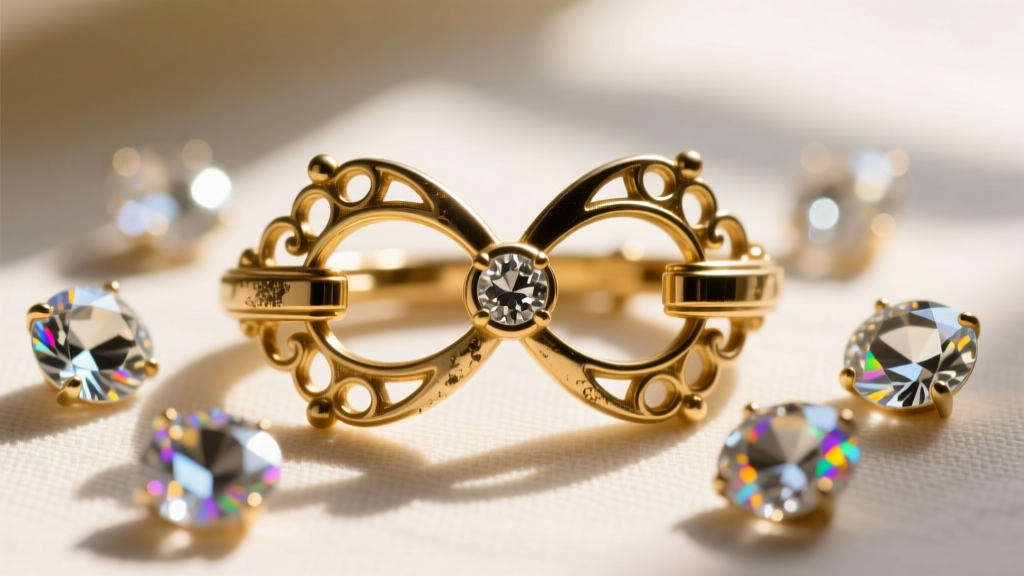
On brooches and pin-backs, D&E almost exclusively used a specific wire loop known as the 'figure-8' or 'infinity' clasp. This mechanism secures the pin stem and looks exactly like the numeral 8. If a brooch features a modern rolling safety clasp or a simple C-clasp without the figure-8 wire loop on the opposite end, it is highly unlikely to be a true Juliana piece.
2. Unfoiled Stones and Open Backs
Cheaper mid-century costume jewelry relied on foil backing behind rhinestones to reflect light. D&E frequently used unfoiled stones set in open-backed bezels. This technique allows light to pass entirely through the stone, creating a deeper, more brilliant sparkle that mimics fine jewelry. Hold the piece up to a light source; if you can see through the back of the clear or colored stones, you are likely looking at authentic D&E craftsmanship.
3. Mechanical Settings Over Glue
While some glue was inevitably used in mid-century manufacturing, true Juliana pieces rely heavily on mechanical settings. Look for prong-set chatons, riveted links, and eyelet-set cabochons. The stones should be held firmly by metal prongs or bezels, not merely glued into a metal cup. Furthermore, D&E frequently used 'puddle stones'—cabochons with a flat back and a slightly domed, irregular top—often in vibrant colors like watermelon tourmaline, lapis lazuli, and amethyst.
Expert Warning: Never trust a piece marketed as 'Juliana' simply because it has a metal tag stamped with the name. The original Juliana line was only ever distributed with a flimsy paper hangtag, which is almost never found intact today. Metal tags are a hallmark of later reproductions or outright fakes.
Occasion Matching: Which Piece for Which Recipient?
Juliana jewelry ranges from delicate single-strand necklaces to massive, shoulder-grazing fringe parures. Matching the scale, color, and style of the piece to the recipient's lifestyle and the specific occasion is key to a successful gift. Use the framework below to guide your selection.
| Occasion | Recipient Profile | Recommended Juliana Style | Estimated 2026 Price Range |
|---|---|---|---|
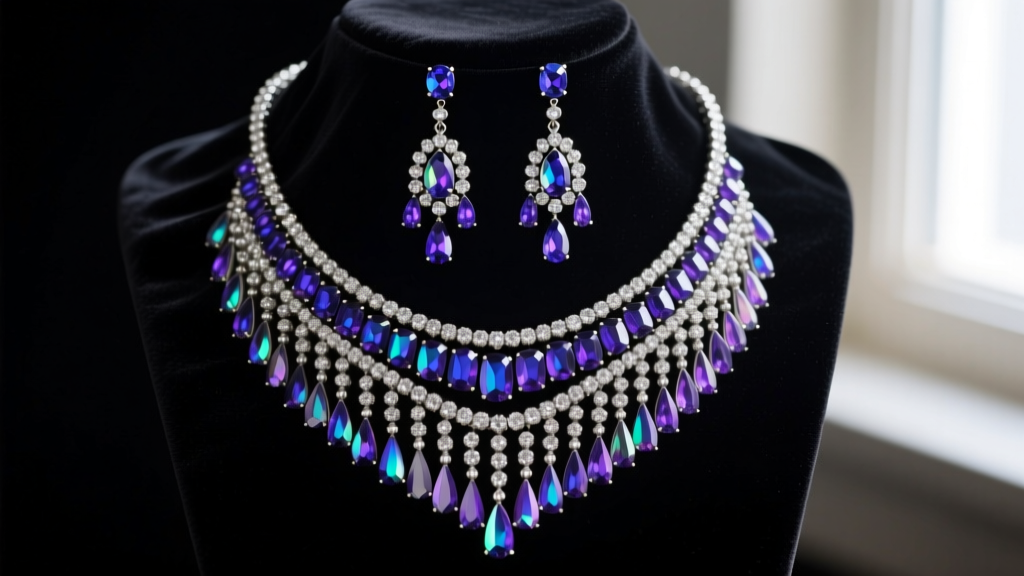
| Milestone Anniversary | Glamour-loving spouse who attends galas or formal events | Multi-strand fringe necklace with aurora borealis (AB) and marquise stones | $350 - $850+ |
| Corporate Retirement | Elegant, understated mentor transitioning to a sophisticated casual wardrobe | Single-strand chaton necklace or a modest topaz rhinestone brooch | $120 - $250 |
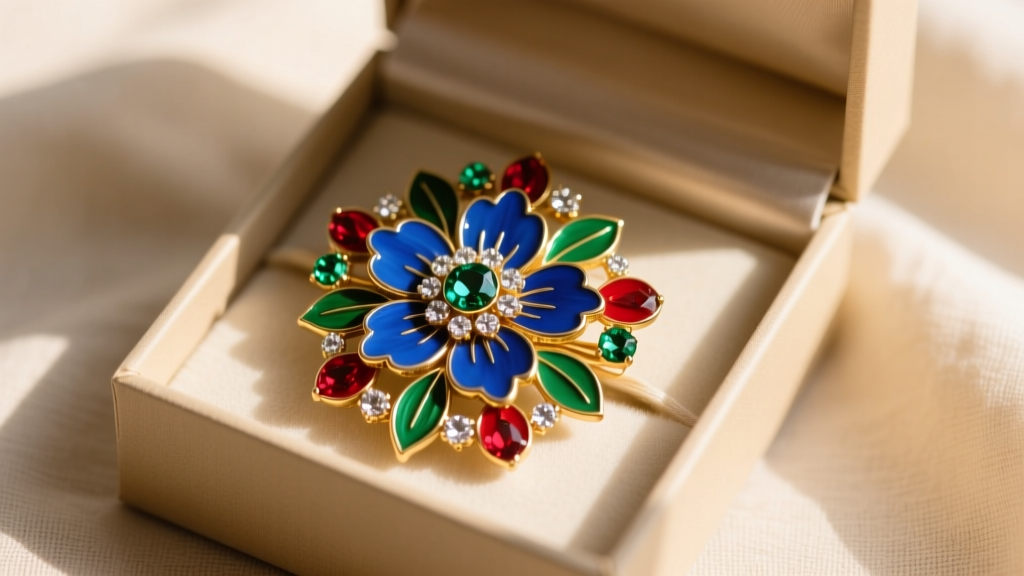
| Birthday / Holiday | Bold fashion enthusiast who loves vintage maximalism and color | Large enameled floral brooch with cabochons or a wide hinged cuff bracelet | $85 - $180 |
| Mother's Day | Sentimental collector who appreciates complete sets and rarity | Complete parure (necklace, clip-back earrings, brooch, and bracelet) | $450 - $1,200+ |
| Valentine's Day | Romantic partner with a fondness for mid-century heart motifs | Heart-shaped dangle earrings or a red-pink rhinestone cluster pin | $75 - $150 |
2026 Valuation & Pricing Tiers
Understanding the current market valuation is essential to ensure you are paying a fair price and not overpaying for damaged goods. The vintage jewelry market has matured significantly, and condition dictates value more than almost any other factor. According to insights from Lang's Antique Jewelry University, proper condition assessment requires a meticulous eye for detail.
The Condition Multipliers
- Mint / Excellent: All original stones present, no missing foil (if applicable), plating fully intact, clasps functioning perfectly. Commands top-tier pricing.
- Very Good: Minor wear to plating on high-contact points, perhaps one replaced stone that is nearly indistinguishable from the original. Value drops by 15-20%.
- Good / Fair: Noticeable stone loss, replaced modern clasps (e.g., a figure-8 clasp swapped for a modern lobster claw), or heavy verdigris (green corrosion) on the base metal. Value plummets by 60-80%.
A Note on Modifications: Never gift a piece that has been 'updated' with modern earring posts or new clasps. In the collector community, structural modifications destroy the historical integrity and resale value of the piece. Always seek out all-original examples, even if they require a professional ultrasonic cleaning.
Sourcing and Gifting Best Practices
Finding authentic vintage Juliana jewelry requires moving beyond generic antique malls and unvetted online marketplaces. In 2026, the most reliable sourcing channels include specialized online dealers on Ruby Lane, dedicated vintage jewelry storefronts on 1stDibs, and vetted private collector groups on social media platforms. Always request high-resolution macro photographs of the clasps, the backs of the stones, and the soldering points before committing to a purchase.
The Art of Presentation
Because original Juliana boxes are virtually non-existent, presentation is your opportunity to elevate the gifting experience. Avoid cheap, modern plastic inserts. Instead, invest in a high-quality, acid-free archival jewelry box lined with untreated cotton or unbleached muslin. This prevents the sulfur and acids found in standard commercial packaging from tarnishing the gold-tone or rhodium plating.
Include a printed certificate of authenticity detailing the piece's era, the specific D&E construction markers present (like the figure-8 clasp and unfoiled stones), and care instructions. Remind the recipient to keep the piece away from perfumes, lotions, and ultrasonic cleaners, which can strip the aurora borealis coating and loosen the vintage adhesives. By combining rigorous authentication with thoughtful, historically respectful presentation, your gift of vintage Juliana jewelry will be cherished as both a stunning accessory and a treasured artifact of mid-century design.


