Rare Vintage Costume Jewelry: 2026 Trend & Value Guide
Discover the top rare vintage costume jewelry trends for 2026. Learn to identify hallmarks, value jelly belly lucite, and invest in mid-century masterpieces.

The 2026 Market Shift: Why Rare Vintage Costume Jewelry is Outperforming
As we navigate the 2026 luxury landscape, a fascinating divergence has occurred in the secondary jewelry market. With the spot prices of gold and natural diamonds reaching historic, prohibitive peaks, serious collectors and fashion archivists have aggressively pivoted toward rare vintage costume jewelry. No longer viewed merely as an affordable alternative to fine jewelry, investment-grade costume pieces from the 1930s through the 1960s are now recognized as wearable, historical art. According to market analysts at Invaluable, auction hammer prices for verified, pristine mid-century surrealist and nature-inspired costume pieces have appreciated by an average of 22% year-over-year since 2024.
This surge is driven by a scarcity of raw materials—specifically the unique lucite carvings, poured glass techniques, and proprietary metal platings that are virtually impossible to replicate today. For the modern collector, understanding the nuanced hallmarks, material signatures, and structural anachronisms of these pieces is the difference between securing a museum-quality asset and overpaying for a polished reproduction.
Material Mastery: Identifying High-Value Signatures
To accurately value rare vintage costume jewelry, one must look past the sparkle and analyze the raw materials. The mid-century era was a playground of material experimentation, driven by wartime metal rationing and post-war technological booms.
Jelly Belly Lucite & Carved Cabochons
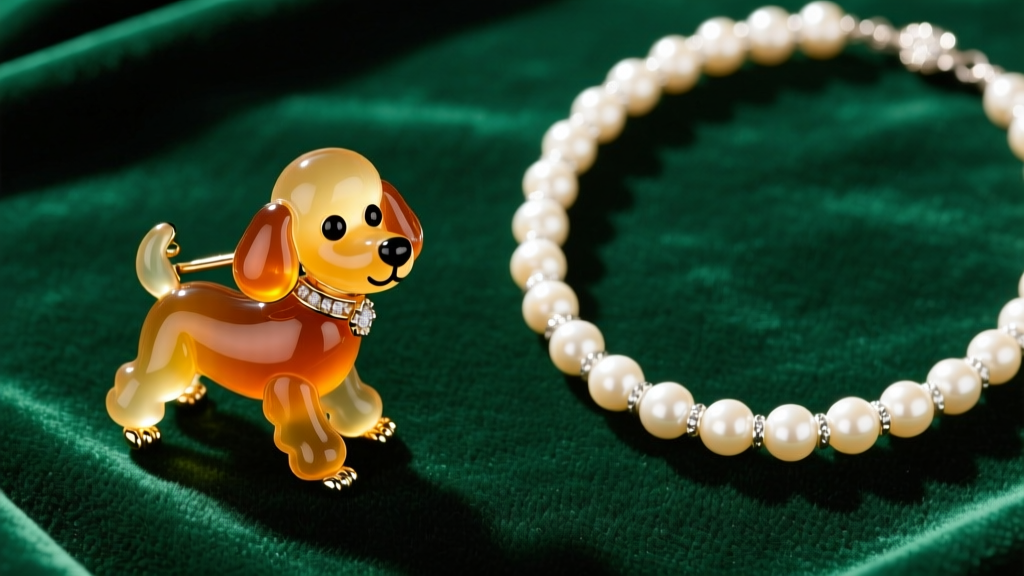
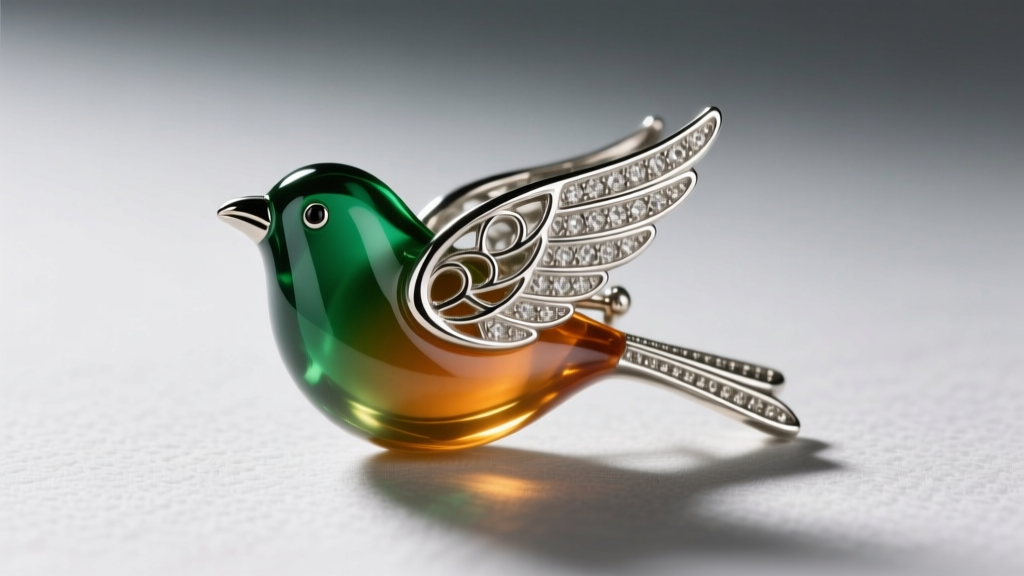
Perhaps the most fiercely hunted category in the 2026 market is the "Jelly Belly." Pioneered by Trifari’s legendary head designer Alfred Philippe in the late 1930s and 1940s, these pieces feature a large, carved, and highly polished piece of clear or colored lucite (often shaped like an animal's belly) set within sterling silver or rhodium-plated base metal. The optical illusion makes the lucite appear as a massive, glowing cabochon gemstone. Authentic Trifari Jelly Bellies from this era, particularly the poodle, bird, and seal motifs, routinely command between $1,500 and $4,500 at auction, provided the lucite is free of deep scratching and the rhodium plating remains intact.
Aurora Borealis & The 1956 Dating Marker
Rhinestone composition is a critical dating tool. In 1956, Swarovski collaborated with Christian Dior to introduce the "Aurora Borealis" (AB) finish—a micro-thin metallic coating applied to glass stones that creates an iridescent, oil-slick rainbow effect. If you are evaluating a piece of rare vintage costume jewelry that features genuine AB stones, it cannot predate 1956. This is a vital authentication metric, especially for houses like Elsa Schiaparelli. Because Schiaparelli’s primary couture house closed in 1954, the presence of AB stones on a Schiaparelli-marked piece immediately identifies it as later licensed production or late-era stock, significantly altering its valuation matrix compared to her pre-war poured-glass surrealist masterworks.
The Big Four: Designer Hallmarks & 2026 Valuation Matrix
While thousands of costume jewelry manufacturers operated in the 20th century, the secondary market in 2026 heavily favors "The Big Four" for investment purposes. Below is a comparative framework for identifying and valuing their most sought-after eras.
| Designer / House | Era & Hallmark Identifier | Key Material Signature | 2026 Auction Range (Pristine) |
|---|---|---|---|
| Trifari (Alfred Philippe) | 1930s-40s: KTF or Crown over T | Jelly Belly Lucite, Rhodium Plating | $1,200 – $4,500+ |
| Miriam Haskell | 1940s-50s: Oval Plaque or Horseshoe | Russian Gold, Bohemian Baroque Pearl | $600 – $2,800 |
| Elsa Schiaparelli | 1930s-50s: Block Letters or Script | Poured Glass, Surrealist Motifs | $800 – $3,500 |
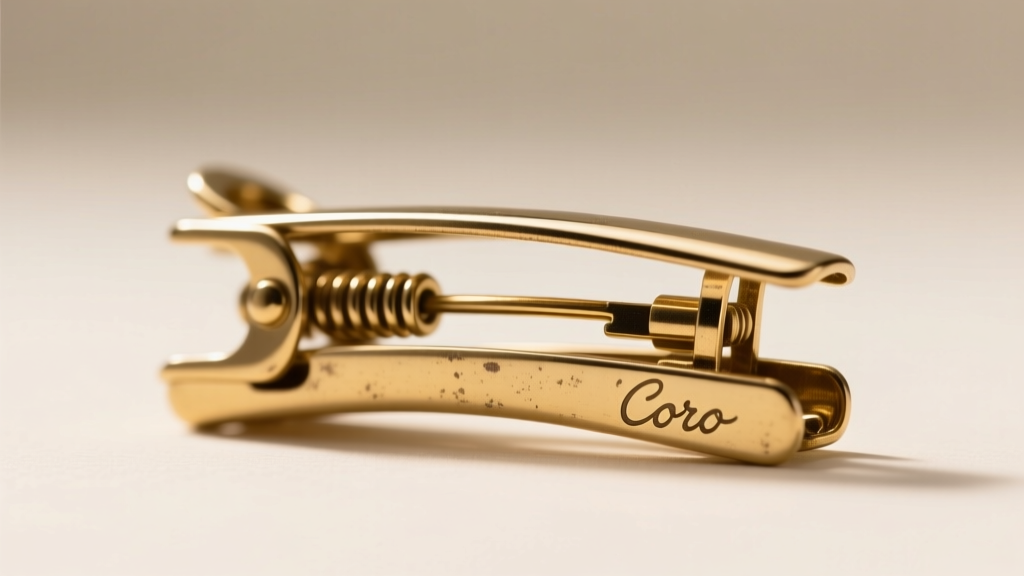
| Coro | 1930s: Script or Duette Patent No. | Enamel, Mechanical Clip Mechanisms | $350 – $1,500 |
Authentication Red Flags & Troubleshooting
As valuations climb, so does the sophistication of counterfeit and "frankenstein" pieces (authentic parts assembled incorrectly). When conducting due diligence on rare vintage costume jewelry, apply this rigorous troubleshooting checklist:
- Glue Creep & Stone Setting: Modern reproductions often use cyanoacrylate (super glue) to secure rhinestones, leaving a visible, cloudy residue over the foil backing. Authentic mid-century pieces predominantly rely on meticulous prong settings or clean, hidden adhesive application. If you see cloudy glue spilling over the facets of a supposedly 1940s brooch, walk away.
- Clasp Anachronisms: The hardware tells the true story. If a piece claims to be from the 1930s but features a modern roll-over safety clasp, it is likely a later reproduction or heavily modified. Authentic 1930s and 40s pieces typically utilize trombone clasps (a push-pull tube mechanism) or simple C-catches without the rolling safety mechanism. As noted by the experts at Lang Antiques University, hardware evolution is one of the most reliable dating methods in antique jewelry.
- "Dead" Stones vs. Pristine Foil: Inspect the foil backing of rhinestones under a 10x jeweler's loupe. Moisture intrusion over decades causes the silver or gold foil to oxidize and turn black, killing the stone's refraction. While "dead" stones lower the retail value by 30-40%, they are ironically a strong indicator of genuine age. Conversely, pristine, blindingly bright foil in a supposedly 80-year-old piece warrants deep suspicion of modern replacement.
- Russian Gold Patina: Miriam Haskell’s signature "Russian Gold" is a specific 24k gold plating over a brass/copper base. Over 70+ years, it ages to a distinct, warm, almost bronze-like patina. If the gold on a Haskell piece looks bright, brassy, and uniformly yellow, it has likely been re-plated, instantly destroying its archival value.
"In the current market, condition is secondary to originality. A Trifari brooch with original, slightly worn rhodium and a few 'dead' stones will always out-value the exact same brooch that has been aggressively re-plated and re-stoned by a well-meaning but misguided restorer."
— 2026 Vintage Jewelry Archival Report
Styling Surrealist & Mid-Century Pieces for Modern Wardrobes
In 2026, the maximalist layering of the early 2020s has given way to "Curated Surrealism." The modern styling framework relies on stark contrast: pairing a hyper-minimalist, architectural silhouette with a single, massive, and undeniably rare vintage costume jewelry piece. A 1938 Elsa Schiaparelli surrealist insect or eye brooch, for example, is no longer hidden on a traditional lapel; it is deployed as the sole focal point on a stark, collarless wool coat or a structured silk column dress.
Similarly, Miriam Haskell’s complex, multi-strand baroque pearl and Russian gold lariats are being worn draped loosely over the back of deep-V evening wear, or wrapped multiple times around the wrist as a heavy, organic cuff. The key to styling these rare artifacts is to let them dictate the mood of the outfit, treating the garment merely as a gallery wall for the jewelry.
Sourcing Strategies: Estate Sales vs. Auction Houses
Finding true, investment-grade rare vintage costume jewelry requires moving beyond standard online marketplaces, which are currently saturated with misidentified later-era pieces. For high-end acquisitions, focus on specialized auction houses like Doyle New York and Bonhams, which frequently feature dedicated "Important Costume Jewelry" sales with rigorous provenance checks.
For those willing to put in the legwork, regional estate sales in historically affluent areas remain the most lucrative hunting grounds. The key is to arrive early and look for the "unphotographed" lots—boxes of tangled, uncleaned jewelry that estate liquidators often overlook. Armed with a 10x loupe and a deep knowledge of 1930s patent numbers and trombone clasps, the astute collector can still uncover museum-quality masterpieces hiding in plain sight.


