The Ultimate Vintage Jewelry Stand Buying Guide for Collectors
Master the vintage jewelry stand market. Learn to identify Victorian cast iron, Art Deco Bakelite, and mid-century brass displays.

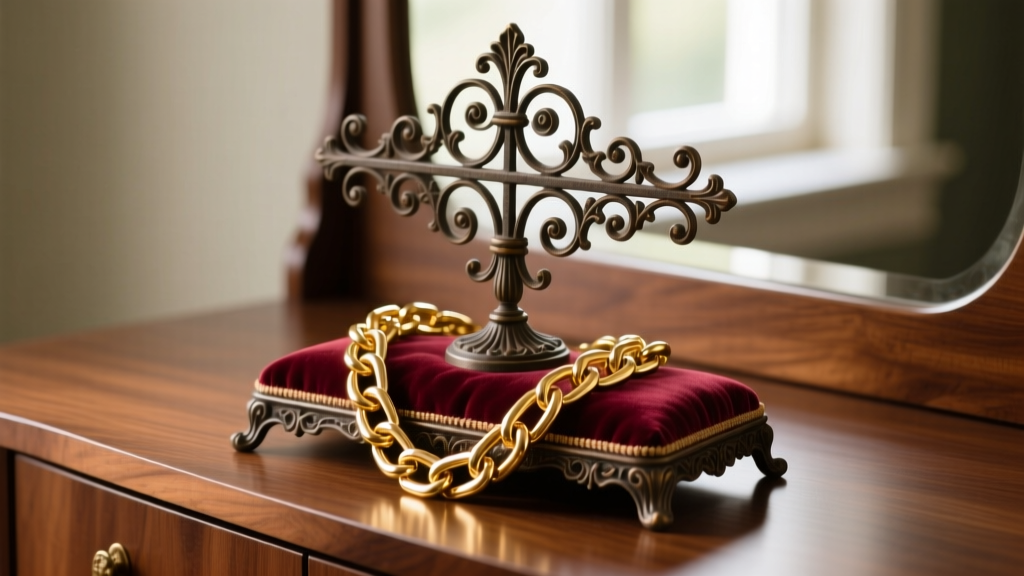
For serious estate jewelry collectors and antique dealers, the presentation of a piece is inextricably linked to its historical provenance. Draping a 1920s diamond sautoir over a modern acrylic rack or placing a Victorian mourning brooch on a mass-produced plastic tray strips the item of its contextual soul. In the current 2026 market, where provenance and period-correct staging command premium valuations, sourcing an authentic vintage jewelry stand is no longer just an aesthetic choice—it is a critical component of archival preservation and high-end merchandising.
This comprehensive buying guide cuts through the noise of the antique market. We will dissect the material sciences, structural failure modes, and era-specific hallmarks you must know before investing in period-correct jewelry displays.
The Collector’s Standard: Why Era-Correct Displays Matter
Beyond mere aesthetics, utilizing a period-accurate vintage jewelry stand serves three functional purposes for the serious collector:
- Contextual Valuation: Auction houses and high-end estate buyers subconsciously assign higher value to pieces staged in era-appropriate settings. A Georgian foil-backed garnet necklace displayed on a 19th-century cast-iron valet signals authenticity and care.
- Material Compatibility: Modern synthetic fabrics and cheap metals can off-gas volatile organic compounds (VOCs) that accelerate the tarnishing of sterling silver and the degradation of natural pearls. Authentic vintage stands, when properly restored with archival materials, offer superior environmental stability.
- Weight Engineering: Antique jewelry—particularly Victorian gold-filled chains and Retro 1940s gold collar necklaces—is exceptionally heavy. Vintage stands were engineered with specific center-of-gravity ratios and weighted bases to support these substantial loads without tipping.
Identifying Authentic Vintage Jewelry Stands by Era
Victorian (1837–1901): Cast Iron and Hand-Tooled Leather
The quintessential Victorian jewelry stand is a triumph of the Industrial Revolution's sand-casting techniques. These pieces are characterized by intricate Eastlake or Rococo Revival motifs, heavy bases, and 'japanned' (baked enamel) finishes.
What to look for: Genuine Victorian cast iron is remarkably heavy and will easily pass a magnet test. Look for the telltale 'sand-pitting' texture on the underside of the base, a byproduct of the sand-mold casting process. Avoid pieces that feel unusually light; these are often 20th-century reproductions made from hollow pot metal.
Art Deco (1920s–1930s): Bakelite, Catalin, and Mirrored Glass
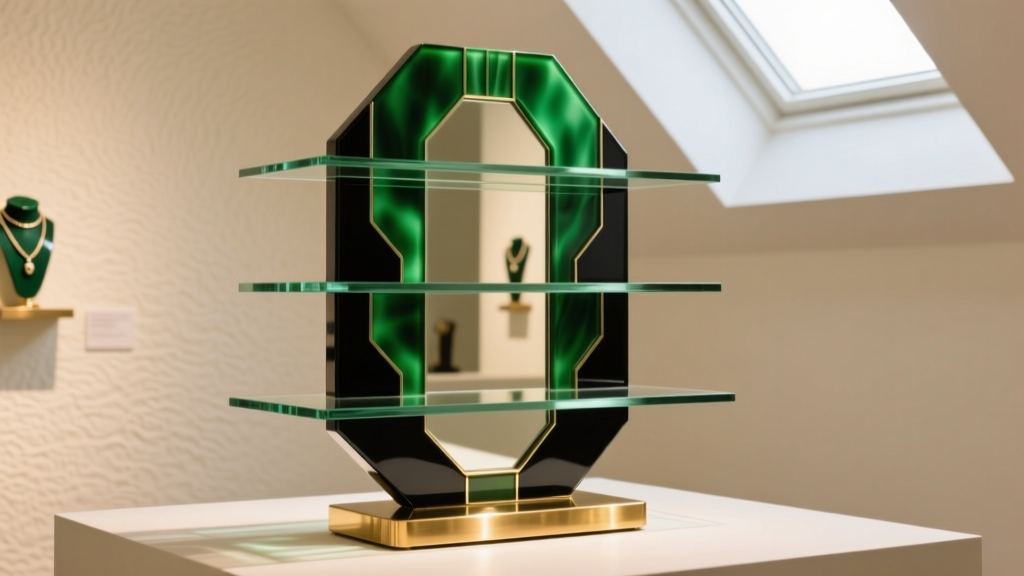
Art Deco displays embraced the machine age, utilizing early plastics like Bakelite and Catalin, paired with chrome plating and beveled mirrored glass tiers. These stands are highly sought after and frequently faked.
Authentication Protocol: To verify genuine Bakelite or Catalin, use the 'hot water test.' Submerge a discreet area in hot (not boiling) water for 30 seconds. Genuine phenolic resins will emit a distinct, sharp chemical odor resembling formaldehyde or camphor. Modern acrylic reproductions will smell like nothing or faintly of hot plastic. Furthermore, test the plastic with Simichrome polish on a cotton swab; authentic Bakelite will leave a yellow or orange residue on the cloth.
Mid-Century Modern (1950s–1960s): Solid Brass and Teak
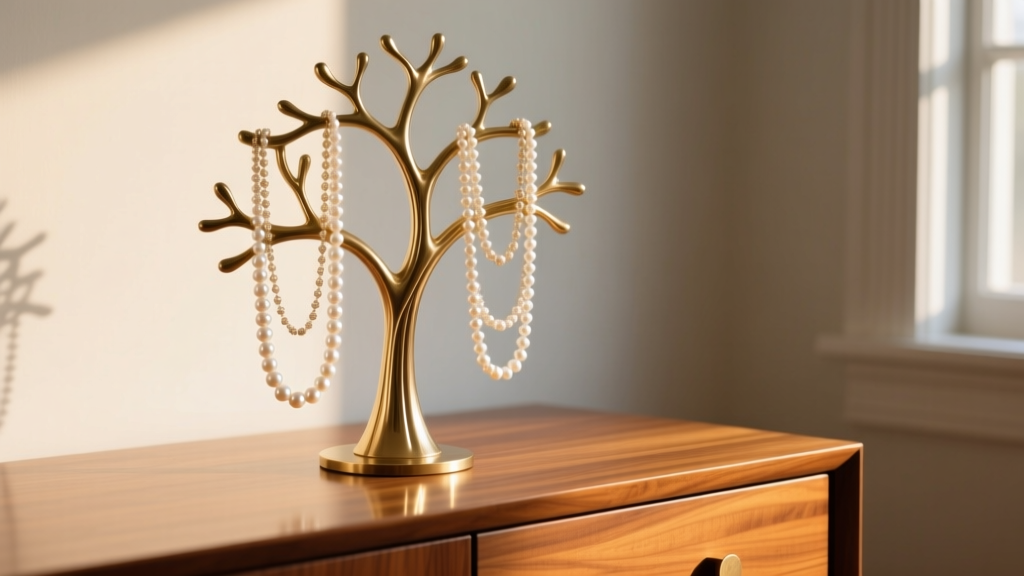
Mid-century stands stripped away the ornamentation, focusing on clean lines, Danish modern teak wood bases, and solid brass extrusions. 'Tree-style' stands and tiered brass valets dominated the era.
What to look for: Verify that the brass is solid, not plated. Look for a seamless patina and check the threading where the brass rods screw into the wooden base. Original mid-century hardware often features slotted, flat-head screws rather than modern Phillips heads.
Critical Inspection Points: Flaws, Fakes, and Fatal Damage
When evaluating a vintage jewelry stand, structural integrity and material degradation are your primary concerns. Here is a troubleshooting framework for the most common failure modes:
1. The 'Zinc Pest' and Pot Metal Armatures
Many Art Deco and Retro-era stands utilized Zamac (a zinc, aluminum, magnesium, and copper alloy) for internal structural armatures, which were then encased in Bakelite or wood. Over decades, Zamac can suffer from 'zinc pest'—a destructive intergranular corrosion that causes the metal to expand and crumble into a grey powder. Inspection tip: Look for hairline cracks on the exterior Bakelite or wood veneer, particularly near joints. This indicates internal armature expansion. Once zinc pest begins, the stand is structurally compromised and virtually impossible to stabilize.
2. Velvet Rot and Acidic Off-Gassing
Victorian and Edwardian stands frequently feature padded velvet inserts. Original 19th-century velvet dyes and sizing agents are highly acidic. According to the American Institute for Conservation (AIC), acidic textiles can drop below a pH of 5.0, causing severe tarnishing and micro-corrosion on sterling silver and copper alloys left in prolonged contact. Actionable advice: Never store bare silver on original vintage velvet. Use an archival-grade, acid-free Mylar or polyethylene barrier sheet between the jewelry and the antique textile.
3. Solder Fatigue in Brass Valets
Mid-century brass 'tree' stands often feature branches soldered to a central column. Decades of bending and the weight of heavy chains cause lead-tin solder joints to fatigue and fracture. Inspect the base of every protruding hook for dark, powdery oxidation or micro-movements when gentle pressure is applied.
Valuation Matrix: What You Should Pay in Today's Market
Pricing for a vintage jewelry stand varies wildly based on material rarity, condition, and maker marks. Below is a 2026 market valuation matrix based on recent auction data and antique dealer pricing guidelines from Kovels Antiques & Collecting.
| Era / Style | Primary Material | Condition Grade | Estimated Price Range (USD) | Collector Demand |
|---|---|---|---|---|
| Victorian Ornate | Sand-Cast Iron, Japanned | Excellent (Original Finish) | $450 - $950+ | High (Museum/Dealer) |
| Art Deco Tiered | Catalin / Bakelite, Mirror | Very Good (No Cracks) | $250 - $600 | Very High |
| Retro 1940s Valet | Macassar Ebony, Chrome | Good (Minor Veneer Lift) | $150 - $350 | Moderate |
| Mid-Century Tree | Solid Brass, Teak Base | Excellent (Original Patina) | $80 - $180 | High (Interior Design) |
| Edwardian Travel | Tooled Leather, Wood | Fair (Missing Fittings) | $60 - $120 | Niche (Horology/Travel) |
Pro-Tip for Buyers: A 'shabby chic' distressed finish on a Victorian cast-iron stand destroys its value to serious antique jewelry collectors. Always prioritize stands with their original, albeit worn, japanned finish over those that have been aggressively wire-brushed and repainted with modern chalk paint.
Archival Preservation and Display Best Practices
Once you have acquired an authentic vintage jewelry stand, proper maintenance ensures its longevity and protects the jewelry it holds.
- Cast Iron Maintenance: Never use water or liquid cleaners on japanned cast iron. Dust with a soft brush and apply a micro-thin layer of Renaissance Wax to protect the finish from ambient humidity and prevent surface rust.
- Bakelite Polishing: If your Art Deco Catalin stand has developed a cloudy, oxidized surface (often mistakenly called 'bloom'), gently polish it with a high-quality automotive rubbing compound followed by a museum-grade microcrystalline wax. Do not use alkaline cleaners, which will permanently etch the phenolic resin.
- Weight Distribution: When loading heavy estate necklaces onto a tiered stand, always load from the bottom up. Placing heavy gold link chains on the top tier of a mirrored Art Deco stand raises the center of gravity and risks catastrophic tipping, which will shatter the antique beveled glass.
Sourcing Strategy: Where to Find Authentic Pieces
Finding a high-quality vintage jewelry stand requires looking beyond standard antique malls, which are often saturated with 1980s reproductions. Focus your sourcing efforts on:
- Horological and Gentleman's Estate Auctions: Men's estate sales frequently feature heavy brass valets and cast-iron pocket watch/jewelry stands that were overlooked by traditional jewelry buyers.
- Specialized Bakelite and Plastics Shows: Dealers who specialize in early 20th-century plastics often acquire Art Deco jewelry displays as part of larger vanity set lots and sell them individually.
- Architectural Salvage Yards: Surprisingly, high-end architectural salvage dealers often pull built-in jewelry displays and heavy cast-iron vanity valets from demolished 19th-century mansions.
By understanding the material composition, historical context, and structural vulnerabilities of these functional antiques, you can confidently acquire a vintage jewelry stand that not only elevates the presentation of your collection but also serves as a valuable, appreciating asset in its own right.


